Hawthorn Farm Athletic Club in Hillsboro, OR

The Best Athletic Club and Gym in Hillsboro, OR

(503) 640-6404 Club Calendar My Account
Join Now Free Pass
  • About
    • Who We Are
    • Blog
    • Map & Directions
    • Leadership
    • Join The Team
  • Membership
    • Membership Overview
    • Member Benefits
    • Membership Referral Program
    • Club Tour
    • Club Reservations
    • Guests & Temporary Members
    • Free Trial VIP Membership
  • Schedules
    • Events
    • Group Exercise Schedule
    • Aquatics Schedule
    • Court Sports Schedule
    • Rock Wall Schedule
    • Pickleball
  • Fitness
    • Studio and Fitness Spaces
    • Group Exercise Program
    • Personal Training
    • Small Group Training
    • Meet Our Fitness Team
  • Family
    • Youth Camps
    • Kids in the Club
    • Kid Central (Child Care)
    • Self Managers (Age 9-12)
    • Teen Fit Certified (Age 13-17)
  • Aquatics
    • Aquatics Overview
    • Youth Lessons
    • Adult Lessons
    • Youth Swim Team
    • Meet Our Instructors
  • Wellness and Events
    • Event Rentals
    • Wellness Center
    • Wellness Events

What is a Healthy Mindset… For YOU

February 6, 2022 by Heidi Sivers-Boyce

A Healthy Mindset for Exercise
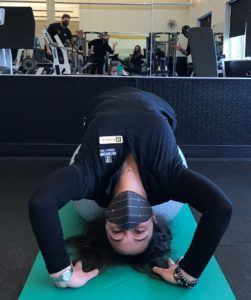
If you’re putting yourself under pressure to exercise more, train harder, and perform at your peak, you may benefit from adjustments to your mindset.  HFAC specializes in approaching fitness, health and wellness in ways that work for each individual. We are all different.  This blog explores the mindset of acceptance, how to know when to hustle, and why it can be okay to go with the flow.

Les Mills Fit Planet interviewed Emma Slade, an Australian Exercise Psychologist who works with everyone from pro athletes and keen gym-goers to people battling depression and struggling to get up off the couch.  Emma Slade observes that when it comes to getting the maximum benefit from exercise, most believe a good mindset equally as important as physical abilities. Yet, chances are we spend plenty of time chasing physical fitness gains and nowhere near as much working on getting our mindset in good shape.

At HFAC we hear daily from our community members working on keeping a strong mindset during the unique and long challenges of the pandemic.

A focus on mindset “doesn’t mean we should all down tools (or in this case barbells) and switch our focus entirely from muscles to mental fortitude. But exercise psychology offers key things to consider when it comes to building a strong mental foundation for any physical activity you pursue.”

HOW CAN EXERCISE PSYCHOLOGY HELP YOU?

Emma Slade: “When people think of sports and exercise psychology they think of elite athletes, and a lot of exercise psychologists work in this space. But I have always wanted to work with the everyday person and help them establish their own healthy relationship with exercise. Everybody knows exercise is good for them. So simply slamming people with more of this knowledge isn’t necessarily going to promote long-term change. “I just can’t get going today. I’m not motivated. I don’t feel like it.” are all statements with both physical AND psychological roots. Exercise psychology focuses upon the latter.”

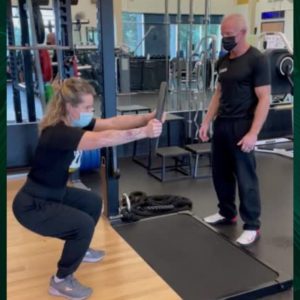
A lot of HFAC Members find support in the physical and psychological components of exercise with individual, partner or small group Personal Training   But sometimes the need is different.

Emma Slade: “Confidence, perceptions of self, or previous experiences around exercise are just some of the other mindset barriers that get in the way of exercise. A lot of what I do is work with people to overcome these barriers. It’s a classic statement that if exercise was a pill it would be the most widely prescribed medicine out there. However, even though we have this beautiful thing we could all use in various capacities for overall wellbeing, a lot of the population don’t. And that’s where the psychology component comes into it. There’s no specific fitness formula that will work for everyone, it’s about working one-on-one and using psychology to explore what works for the individual.”
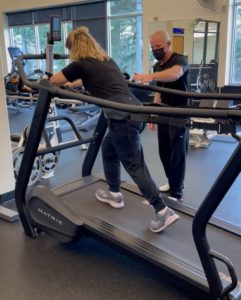
WILL YOU ONLY BENEFIT FROM A PSYCHOLOGIST IF YOU’RE DEALING WITH ‘ISSUES’?

“Seeing a psychologist still, unfortunately, has a stigma associated with it but you can work with a psychologist for multiple reasons. Yes, as a psychologist, you work with individuals experiencing mental health concerns and assist people to overcome some of the hardest and most challenging parts of their life. But it’s not all about being at rock bottom. It’s also so much about potential. A massive part of psychology is increasing wellbeing and performance that’s already good and making it better. Not everyone experiences a mental illness in their lifetime, but we all have mental health and psychology works with both.”

“Today we have a real hustle mentality. We have access to all sorts of tools and resources to help us be our best and rule the world, but should we strive for that?”

IS ALWAYS PUSHING TO BE YOUR BEST IMPORTANT?

“It’s important to check where your desire to achieve more is coming from. If you’re a driven person and you have a real growth mindset, where you want to face challenges and overcome barriers, that’s great. But if wanting to go hard, be better and be stronger is coming from a place of comparison, a place of self-judgment, or a place of punishment, then that’s something to be wary of.

Today we have a real hustle mentality. We have access to all sorts of tools and resources to help us be our best and rule the world, but should we strive for that? There’s nothing wrong with accepting where you’re at. And if you’re truly happy there, then stay there.”

DOES THIS MEAN GOAL-SETTING IS NOT AS IMPORTANT AS WE ONCE THOUGHT?

At HFAC we encourage setting regular, achievable goals. This is a fundamental part of HFAC’s unique New Member onboarding and our New Start Training Programs. 

“Research shows when it comes to behavior change, self-monitoring of behavior, not a pure focus upon the intended outcome, is key. So goals are valuable, but they must be behavioral-based, not outcome-based.

For many, setting a goal to lose weight can be a great motivator, but what’s important is the difference between process and outcome. This means you don’t focus on losing 10 kilos, you focus on the process (eating well, exercising, prioritizing sleep, managing stress levels). When you engage with that process, there’s a high likelihood you’ll lose the weight anyway. By focusing on the process, you promote the likelihood of finding a form of exercise that doesn’t feel like a chore and you do it because you enjoy it.

It’s important to note that most people are actually very good at losing weight. But if you’ve only been focused on the outcome of losing weight, and the process hasn’t been overly enjoyable, meaningful, or fulfilling, then you are probably going to put the weight back on.”
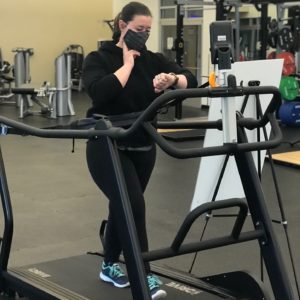
FEELING ANXIOUS ABOUT EXERCISE CAN KICK IN WHETHER YOU’RE SUPER FIT OR IF YOU’RE JUST STARTING OUT. IS EXERCISE ANXIETY A BAD THING?

“You don’t want to eliminate anxiety from all aspects of life, because anxiety has a purpose. Anxiety is our body perceiving physically threatening or emotionally frightening situations and alerting you so that you can effectively deal with them. Anxiety becomes dysfunctional when it’s telling you that absolutely everything is threatening, even when there is no rational reason to be anxious. The interesting thing about anxiety and exercise is the physical sensations associated with each are very similar. Your heart rate goes up and you may feel hot, you feel sweaty, you’re experiencing shortness of breath. So if you’re already feeling anxious about exercise, and then you start to exercise and you further experience these sensations, it can be hard to differentiate what is anxiety and what is a by-product of exercise. A large part of a sport and exercise psychologist’s work is helping individuals to learn how to differentiate these physical feelings and unpack the thoughts and behaviors that may promote anxiety and influence future involvement in exercise.”

HOW CAN ANXIETY IMPACT YOUR EXERCISE EXPERIENCES AND THE RESULTS YOU GET?

“There are some who have quite traumatic associations with exercise. For example, a client who was a strong swimmer in her teenage years. The motto on the swim club wall was ‘Go hard or go home’ which instilled the idea that unless you’re going hard you may as well not bother. So, when she was considering exercise as an adult it was anxiety-provoking and negative. For others, anxiety can come from not feeling comfortable or connected with your body, confident in your skills, or that you have the support around you to start exercise.

It also works at the other end of the scale, where someone finds something that works for them really well, but like a lot of things, when you do too much it becomes dysfunctional. What we’ve seen lately, is that for some, when the world seems to be falling apart, it can feel like the only thing you can control is how much you eat, and how much you exercise. People tend to grasp on to exercise in order to grasp some control, which is great, but then that’s also the space where anxiety and exercise dependency and overtraining can kick in.”

You have legitimate reasons for struggling to exercise, but you can work with that and navigate around it.

IS LAZINESS A THING? WHY DO WE MAKE EXCUSES TO EXERCISE? AND IS IT BAD?

“Some people are just naturally more wired to be active and some aren’t. As adults, it’s easy for us to just say, ‘I’m just lazy’, but that’s a massive overgeneralization. Our lives are all busy in different ways. You might have five kids, run your own business, juggle financial concerns, and on top of all of that are just trying to get through each day. Or you may have a seemingly smooth day-to-day work life and routine, but are experiencing a mental health concern that consumes a lot of your space. In both situations, it’s easy to blindside exercise from the list. It’s not that you’re being lazy, you’re understandably occupied in other areas of life. You have legitimate reasons for struggling to exercise. I’m always very quick to challenge a client’s ‘excuses’ for not exercising – are they actually excuses? Often they are real and valid reasons, other times they are just excuses. But when we get clarity on this we then work together to explore the motivation to change – we acknowledge the process to becoming an ‘exerciser’ won’t necessarily be linear as we navigate that process of change, and that’s okay!”

The process to becoming an ‘exerciser’ won’t necessarily be linear … and that’s okay!

This content was adapted with permission Les Mills Fit Planet . THANK YOU!
HOW TO SURVIVE & GROW STRONG THROUGH ADVERSITY

January 25, 2022 by Heidi Sivers-Boyce

How to Survive & Grow Strong Through Adversity

During this time of extreme challenge it can be helpful to hear from someone who has overcome great adversity. A Les Mills Fit Planet interview with Brooke Rosenbauer offers just such inspiration. HFAC is a proud Les Mills partner, and we are pleased to share this adapted content with permission. This isn’t about someone who found fitness and it changed her life (though we have plenty of those in the HFAC community!). Brooke grew up as a super athletic overachiever. She was involved in soccer, alpine ski racing and ultimate frisbee. Brooke studied international health, led sports-based youth development programs, became a personal trainer, established a career at Reebok, and taught a remarkable number of group fitness classes along the way. However, two pivotal events make Brooke’s story something we can really learn from during hard times. In her early twenties, Brooke was in a traumatic car accident. She spent 10 days in an Ecuadorian hospital before being medically evacuated back to the US. She was bedridden for many months and spent a long time learning to walk again. Then in 2019 Brooke faced another international medical crisis. While holidaying in Greece, she suffered a pulmonary embolism (a life-threatening blood clot in the lung). She spent a month in a Greek hospital before returning to the US and again starting to rebuild her health and fitness from scratch. Les Mills Fit Planet spoke to her about how dealing with dark times has refined her approach to fitness, and how she now coaches others to become the best versions of themselves.
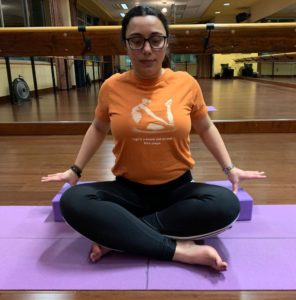
PUTTING THINGS INTO PERSPECTIVE IS KEY
“Going through something that threatens your health, or even your life puts everything into perspective. You realize that nothing else matters if you aren’t healthy. Health truly is wealth. “I’ve stopped worrying about being lean and how my clothes fit or how I look in photos. Now, my motivation is that I want to take care of my body. I want to feel empowered when I lift weights, or free when I run. If my stomach jiggles a little, it doesn’t upset me like it used to because I have more important priorities. I am now playing the long game, and I respect my physical body so much. Nurses told me I survived the pulmonary embolism because of my fitness level, but I feel that in the past I had been beating up on my body by pushing it too much. No more of that. I want to celebrate my body just like it is. “I now know exercise is an amazing way to reconnect with our bodies and take control of our lives. Exercise can help discharge anxious energy or strong emotions that we might not be able to verbalize. It is such a beautiful, healthy way to take care of ourselves. The secret is to honor the bodies we’re given and make sure to balance that exercise with rest and recovery.”

HFAC Personal Trainers specialize in connecting people to healthy goals that motivate & strengthen long term. 

YOU NEVER “WIN” AT FITNESS – IT’S AN ENDLESS JOURNEY
“I tell my coaching clients that bumps can and will happen. You need to be able to make adjustments all the time because life never goes to plan. Your ability to throw the plan out the window and adapt makes all the difference. I always say yesterday is over, so don’t beat yourself up. Today is a new day and there are a lot of good things in the world.”
IT’S OKAY TO FEEL BROKEN, POWERLESS, WEAK, OR VULNERABLE
“I’ve realized humans are capable of feeling multiple emotions at the same time. You can be scared and resolved, vulnerable and joyful, confident and weak. There have been times when I’ve felt broken and vulnerable because I was comparing my capabilities to a past self. As scared as I was, I also accepted that I wouldn’t be “broken” forever. “There are some days that I still feel weak. We all have those days. Exercise has been a huge part of my recovery, because it helps me reconnect with my body; it helps me work through the emotions that are just too big to even talk about; and it has provided an incredible community that supports me and accepts me just as I am.”

“Exercise can help discharge anxious energy or strong emotions that we might not be able to verbalize.”

YOUR GREATEST WEAKNESS CAN BE YOUR GREATEST STRENGTH
“I’m really stubborn, and my whole life I thought it was a bad attribute. It wasn’t until I was in hospital in Greece when I realized my stubbornness was actually a positive. I was in a very low place, I thought that I might have to give up on my fitness career, but then a friend reminded me I was far too stubborn to do that. And that’s what got me through. “I had also been very stubborn a few years earlier. I ran a half marathon just a few months after my accident forced me to learn to walk again. It wasn’t the smartest thing to do, but I did it out of blind determination. It was born from someone congratulating me on being able to walk on my own. It was well-meaning, but I didn’t want to be congratulated for such a basic physical task. So I ran 13.1 miles to prove I could. I’m not sure I regret doing that run, but what was regrettable was that the healthcare system wasn’t really there making sure that I wasn’t doing harm to myself. I had no idea if my body was really ready for this and nobody to help or guide me. It was this experience that really inspired my fitness career, so that I could help other people overcome health challenges and not feel so alone.”

“Building a healthy lifestyle can feel intimidating. There’s way too much information out there, and it’s really hard to get through it alone.”

SELF-LOVE IS AT THE CENTER OF WELLNESS
“When we love and respect ourselves, we take better care of ourselves and fitness is no longer a chore or punishment, it’s something we do because it feels good. The reason I preach self-love so much is because fitness can have the opposite effect if we treat it as a punishment or a way to fill an emotional void. In that case, it can actually be really stressful. Power can be used for good or for evil – exercise is the same. When it comes from self-love, exercise is the healthiest thing we can do for ourselves.”
 YOU DON’T NEED SERIOUS HEALTH ISSUES TO FEEL THE STRUGGLE
“Trauma doesn’t always have to be dramatic, and it is much more prevalent than we realize. As we go through our lives, we accumulate experiences that shape our perceptions about what we can and cannot do. If you struggled with gym class or felt unloved for being out of shape, it can have a deep impact on your ability to engage with fitness, because you believe you’re unfit or unathletic. “If you are struggling, it could be you’re working towards a goal that doesn’t serve you. Too often people just grab goals from Google, but they’re setting themselves up to fail if there’s no basis for that goal. Building a healthy lifestyle can feel intimidating. There’s way too much information out there, and it’s really hard to get through it alone. It’s easy to feel like you’re not succeeding if you don’t know how to set the right goals.”
HAVING A COACH IN YOUR CORNER PAYS OFF
“Whatever your fitness level, and wherever you are on your fitness journey, having a professional in your corner can be amazing. The benefit of a coach is that they ask powerful questions, and they might make you realize that the trade-offs required for achieving a goal might not actually be what you want – and that can be really liberating. I think the difference between a trainer and a coach can be those conversations. While trainers deliver you exercises, they may not push you on your goals or your perceptions. A good coach will find a way to help seek what you’re looking for, but maybe find it in a different way. And they will help you navigate any storms or bumps in the road. A good coach will always cheer you on. But you always need to be your own cheerleader too.“ HFAC offers Personal Training, Small Group Training, and our signature New Start Programs perfect for those looking for a fresh start. BROOKE’S SECRETS TO SUCCESS
  1. Self-love is at the center of wellness – respect and honor the body you’ve got and the life you’ve been given
  2. Seek help as a practice – not just at your lowest points
  3. Turn your pain into power by focusing on what you’ve gained versus what you’ve lost
  4. Celebrate small wins – it could be doing one push up on your toes, making a smart food choice, or choosing a 45-minute workout over the 30-minute option.
  5. Try different types of exercise until you find something you love.

Finding The Best Music to Motivate

January 11, 2022 by Heidi Sivers-Boyce

Finding the Best Music to Motivate Your Workout in Hillsboro

We’ve all experienced the struggle of trying to find the ideal tunes for exercise. Whether you’re after background beats for lifting or motivation-packed music for cardio, no one size fits all. You can hit shuffle on any playlist, but a mediocre music mix can leave you feeling frustrated and unsatisfied – and certainly not focused on getting a good workout. So what can we do about it?

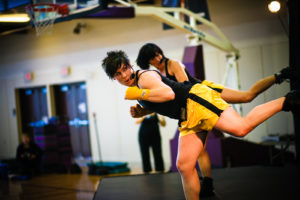
– One way to get musically inspired is to attend HFAC’s Les Mills BODYCOMBAT LAUNCH  ,  BODYPUMP LAUNCH   ,  CORE LAUNCH or all three on Saturday January 15th 2022 or our ZUMBA PARTY Sunday January 16th 2022! Follow the links for details or call us! 503.640.6404 –
CAN GOOD MUSIC REALLY BOOST RESULTS?

Music is, quite literally, instrumental when it comes to creating the ultimate workout. And for good reason. A carefully-curated playlist can have a marvelous effect on our mind and how our muscles respond to exercise. The right playlist can make us work faster and harder, but also make exercise seem easier.

The right playlist can make us work faster and harder, but also make exercise seem easier.

It’s a type of “legal performance-enhancing drug,” says Costas I. Karageorghis, a leading expert in the interplay between exercise and music, and consultant for Run to the Beat London half marathon, British Athletics, England Rugby, Nike, Red Bull, Spotify, IMG, Sony, and Universal Music. Karageorghis has studied the psychological and physiological effects of music and exercise extensively, finding that synchronous music – that which matches the tempo of the exercise – is key to lifting your enjoyment of exercise, as well as driving motivation and boosting results. This type of music is shown to:

  • Reduce the perception of exertion by 12 percent
  • Improve the effects of exercise by 15 percent
  • Boost endurance by 15 percent
  • Lift movement efficiency by seven percent.

“The synchronous application of music results in much higher endurance, while the motivational qualities of music impacted significantly on the interpretation of fatigue symptoms right up to the point of voluntary exhaustion,” explains Karageorghis.

Some researchers have suggested that extraverts (who typically seek out external sources of stimulation) are more responsive to music than introverts. And it seems that those new to a particular exercise might be more responsive to music than experienced trainers.

WHAT MAKES GOOD WORKOUT MUSIC?

Finding the right workout music is both a science and an art. Science tells us there are optimal beats per minute (BPM) and for certain types of training it’s best to match the rhythm and tempo to the activity. In his paper, Psychophysical Effects of Music in Sport and Exercise, Professor Peter Terry provides a good example: “If the goal during warm-up is to elevate the heart rate to 110 BPM, then limit choices to music with a tempo in the range 100-120 BPM or, better still, selections that increase gradually in tempo from resting heart rate (around 70 BPM) up to 120 BPM.”

The ‘art’ part comes in when you start finding motivational music and creatively fusing it with science-backed exercises, something that Les Mills has been perfecting for more than 50 years.  Les Mills classes, including BodyPump, BodyCombat at Core, have been among the most popular offerings at HFAC since opening!  HFAC’s quarterly Les Mills Launches, and new in 2022 quarterly Zumba Parties are great ways to experience the power of music in your workout! 

“It always starts with the music,” says Diana Mills, Les Mills Creative Director. “We have to find music that makes you want to move.” Diana works with a devoted music team that collaborates closely with Program Directors, choreographers, composers, and artists, listening to thousands of songs every month to pick the 10 or 12 tracks for each new workout release.

The team curates unique playlists tailored to the specific demands of the workout. Once each suitable song is identified, the team works with record labels to license the track for group fitness classes around the world.

To ensure the music is pitch-perfect for every movement in every class, sometimes the team will work directly with composers and commission a Les Mills original or cover. These musicians are part of the Les Mills Artists stable – musicians who frequently work directly with the Les Mills creative team to create music.

“Sometimes there just isn’t enough contrast or enough highs and lows in the track to make it work for an exercise class,” explains Ezra Fantl, who leads the Les Mills Artists initiative. “By working directly with artists we can create music that feels perfect for the workout. It also allows us more freedom to use music for different uses, such as livestreaming and marketing.”

THE BEST MUSIC FOR DIFFERENT TYPES OF TRAINING

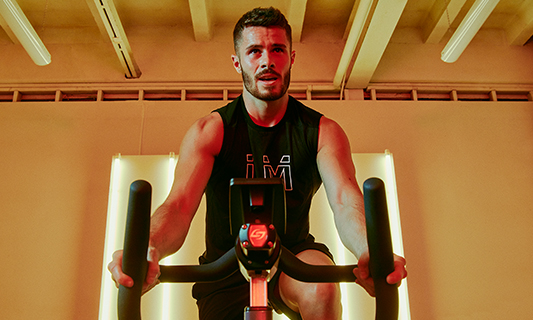
Research shows the role of music is particularly important during stationary cycling. In a 2018 report by ukactive and Stages Cycling, music was identified as a critical factor when selecting a group cycling class by 86 percent of respondents.  HFAC instructors love getting music feedback from their class and tailoring it to the different moods and personalities.

Rachael Newsham, Les Mills Program Director, explains that while people respond well to high-energy fast BPMs, music with a slower BPM is equally important when training focus is on conditioning.

Sourcing knockout music for new BODYCOMBAT™ tracks each quarter, she says the feelings a song evokes are also extremely important. “We always ask how does this song make you feel? Does it speak to you on an energy level and evoke an emotion that will fit with the journey of the workout.”

“We always ask how does this song make you feel? Does it speak to you on an energy level and evoke an emotion that will fit with the journey of the workout.”

While banging beats form the backbone of many great workout experiences, pulsating speakers don’t always strike the right chord. Dr. Marcelo Bigliassi from the University of São Paulo, Brazil, has spent years exploring the neural networks that activate in response to exercise and music. He explains that the use of music during exercise is reliant upon several factors, such as the participant’s attentional style, exercise intensity, complexity, mode, etc. What might motivate during BodyPump, for instance, won’t work for something involving a high level of concentration, or any subdued activity where a strong mind/body connection is key – such as yoga or stretching.

FIND THE PERFECT PLAYLISTS TO SOUNDTRACK YOUR WORKOUT

Follow Les Mills Music on Spotify

You’ll find curated playlists perfect for all sorts of training – everything from running to bodyweight conditioning, stretching, and more. This is also where you can stay up to date with the tunes the fitness creatives are currently listening to.

Check out Les Mills Music Artist page

This is where you’ll find the latest releases by Les Mills Artists.

Check out HFAC’s Group Exercise Schedule for classes to give new inspiration

This article is content adapted by HFAC with permission from Les Mills. Thank you!

Recognizing This Day For Our Health

February 28, 2021 by Heidi Sivers-Boyce

Strength, Wellbeing & Anniversary Reactions

Today, February 28th, 2021, is the one-year anniversary of the announcement that the first Oregonian, a Washington County resident, had the mysterious new Coronavirus.   In just weeks from that date, our lives would begin to drastically change, we would first experience things we are still navigating today.

This means as we navigate March 2021, we will be experiencing anniversaries that mark the beginning of major change.  Here are just a few personal I can think of from my role with HFAC, or in my personal life, that you may remember or relate to.

  • The first request we received to freeze Membership as people began to choose to stay at home that first week of March. What started as a trickle, turned into a stream.
  • The way our HFAC team navigated the fear and shock, channeling energy into purpose.  By the second week of March, we were implementing new virtual options. It’s incredible to read the March 15th, 2020 Newsletter.
  • The odd mix of pride, joy, fear and sadness that came from watching Charity Hunt and Nancy Causton host HFAC’s first Virtual Class Forever Fit to great success on March 16th.
  • The heavy and lonely decision to close HFAC’s doors to in-person visits on March 18th, soon to be followed by a State-mandate that would first shutter many businesses, leaving many without paid work time and many others navigating a new world of virtual work.
  • My kid’s Spring Breaks beginning early. Approaching the end of March in early discussion of how it could just be a few weeks at home until the kids return to the classroom. 

So much has happened since these firsts, some very personal and others shared with the entire world.   As a health and wellness community, at HFAC we are pausing to take note of these anniversaries.  Research tells us that anniversaries of significant life events, especially traumatic ones, can cause a host of reactions.  They can manifest as emotions, and for some of us can have significant impacts on our short or long-term wellbeing. Known as “Anniversary Reactions”, people may experience increased anxiety, anger, sleep disruption, and related symptoms.  If an Anniversary is not acknowledged, these reactions can be experienced as coming “out of nowhere”. 

Anniversary reactions are related to unresolved grief and significant loss. Adding to our current complexity is the chronic nature of the pandemic, and so much additional societal turmoil going on.  We are still masked, still virtual, still limited and many of us are dealing with huge impacts like loss of health or a loved one, loss of a job or previous financial security.   At the same time as these hardships, we are seeing signs of incredible, significant hope with the vaccine and with decreasing transmission risk levels around us.  Businesses and schools are reopening to in-person activity or moving towards doing so.  Longer days and better weather are lifting moods.  We are navigating a blend of intense challenge and joy, and, as we process our own reactions, we are also needing to navigate those of our children, our parents, our partners, our coworkers. It’s a lot.

At HFAC we have connected to the health benefits of purpose, to being able to serve.  Research on Anniversary Reaction also shows a positive effect.  It can be used as an opportunity for emotional healing.  Progress can be made by recognizing, acknowledging, and paying attention to feelings and issues that surface during this time and letting them release, using them for healing and for gaining perspective.  So today I write to mark this Anniversary and use the opportunity to encourage self-care.  Before directing too much energy into the future, pause and process the upcoming anniversaries that have meaning to you if that feels like an investment in your health.

Here is what that might look like:

  • Challenge yourself not to avoid reminders of anniversaries or avoid feeling emotions that arise.  Instead, create space and notice what comes up for you.
  • If you do notice increased negative emotions in yourself or in others, seek compassion and healthy ways to let them out and be expressed rather than holding them in.
  • Moments of remembrance, whether personal like lighting a candle and listening to music while journaling, or in fellowship, such as sharing stories and memories with those closest to you, can provide structure to a healthy release.
  • Sensory experiences can be especially comforting, such as swimming in water or listening to healing or spiritual music like this performance of Good Night Dear Heart by a University of Oregon Chamber Choir, recommended to me by a researcher on resilience.
  • Connect to your body and emotions through physical activity.  When active, don’t be surprised if strong emotions arise.  Help us create an environment of space and grace at HFAC, if you need to shed a tear in vinyasa or on the treadmill, lift heavier or push harder to sweat it out, we support you in healthy release.

Recognizing anniversaries can often be used as a turning point for recovery by looking over the past year and recognizing how far we have come.  This is an opportunity to reflect on credit due for surviving extreme challenge and gaining new skills.  It is a good time to look inward and appreciate your own courage, resilience, and resourcefulness, and to look at the people around you who have been there through it with you.  Anniversaries can be a time for renewed hope and purpose finding.

While the strong feelings can be upsetting, I hope it is helpful to understand that these are normal reactions.  Giving space to feel can allow them to pass through. Seeking the professional help from a doctor, counselor or therapist can be especially productive and essential if a reaction feels harmful or risky.   There are many professional resources made available to the community to provide care and support in this very hard time.

By Heidi Sivers-Boyce, Ph.D., HFAC President


« Previous Page
Next Page »

Club Building Hours:
Mon-Thurs: 5am-9pm
Fri: 5am-8pm
Sat: 7am-6pm
Sun: 8am-6pm

Holiday Hours:
Monday, September 7th (Labor Day): 7am-2pm

Kid Central Hours:
Mornings

Mon-Sat: 8:30am-1:30pm

Evenings

Mon-Thurs: 5:00pm-7:30pm

Holiday Hours:
Monday, September 7th (Labor Day): 8:30am-1:30pm

4800 NE Belknap Ct, Hillsboro, OR
(503) 640-6404
membership@hfac.com

Hawthorne Farms Athletic Club and Gym in Hillsboro - Facebook Profile Icon Image Hawthorne Farms Athletic Club and Gym in Hillsboro - Instagram Profile Icon Image

Privacy Policy - Terms of Service - Cookie Policy
Hawthorn Farm Athletic Center | Hillsboro, Oregon
Website Design by Azunga